Summary
The Ryanair incident in May 2021 marked a new reference point for Belarus’s international relations. The sharp escalation of tensions between Minsk and Western capitals and especially the unprecedented sanctions slapped by the latter began to modify the structural foundations of not only Belarus’s foreign policy, but also the security framework in the East European region. In a special series of policy papers, Minsk Dialogue experts analyse the impact of these processes on Belarus’s relations with key partners.
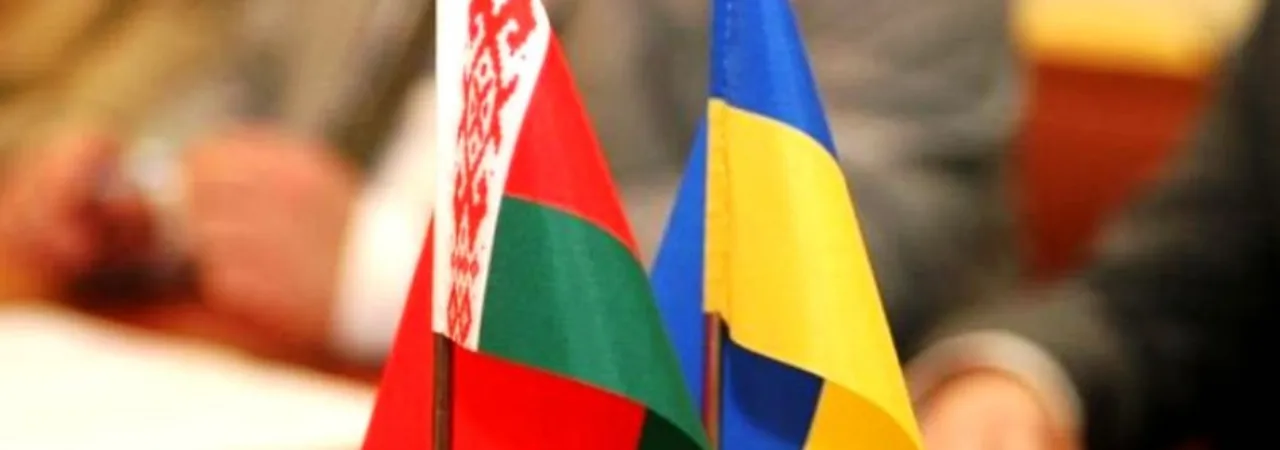
Main trends in the bilateral relations after May 2021
- Back in the first half of 2021, Ukraine’s policy on Belarus in a lot of ways began to copy the Western pattern: some sanctions and restrictions were imposed, and Ukraine turned down Minsk’s services in the settlement of the Donbass conflict. By that time, the countries had already made a few big steps away from the constructive bilateral agenda.
- The free trade area between Belarus and Ukraine was de facto limited and some multilateral and bilateral trade agreements were suspended.
- As the cold season started, and Ukraine sensed energy shortages, possible resumption of Belarusian electricity import — originally halted by a resolution of the Ukrainian government in May and June — became an increasingly relevant issue.
- In diplomacy, the significance of the Lublin Triangle increased for Kyiv as the main format for Ukraine to assert its strategic interests in its relationship with Belarus. The migration crisis became a vital prerequisite for this alliance.
Principal developments and processes in the relations after May 2021
1. Degradation of the bilateral relations
The detention of Raman Pratasevich dominated the agenda throughout May and June. It accelerated the imposition of the 4th package of the EU sanctions, which affected some of the key Belarusian industries, including its export of potash fertilizers, crude oil, petrochemicals, the tobacco industry, and the financial sector. The EU, the U.S., Canada, the UK, and several other countries joined in, while Ukraine gradually introduced targeted restrictions in various spheres. Nevertheless, those were enough to de facto limit the free trade area between Belarus and Ukraine and suspend some multilateral and bilateral trade agreements.
Ukrainian officials — MPs from various factions, representatives of the Foreign Ministry, participants of the Trilateral Contact Group on Donbass, and even President Volodymyr Zelensky — increasingly commented on the end of the constructive relationship with official Minsk. In Ukraine’s power discourse, Belarus pivoted from the position of a partner to that of a growing threat. For example, the Verkhovna Rada registered a draft resolution on the recognition of Aliaksandr Lukashenka as a threat to international security. However, in the end it was turned down by the committee, having failed to get enough votes. Some of the Rada members also mentioned a military threat, citing the possible deployment of Russia’s military bases in Belarus. The Ministry of Foreign Affairs recommended Ukrainian journalists, human rights activists, and civil activists to refrain from making trips to Belarus. Kyiv also confirmed that it would not be using Minsk as the platform for negotiations.
What was perhaps the most strategically dangerous signal of the degrading relationship became obvious in Ukraine’s internal political rhetoric. The Belarus issue became associated in the country’s media scene exclusively with hazards and threats to its national security. Opposing political forces employ it, along with Russia, as a “bugaboo” to launch media attacks on each other. This is becoming a new normal as military and political tensions mount between Moscow and Kyiv. Based on statements of Ukrainian officials, Belarus is no longer perceived as a regional security system actor that is isolated from Russia. This trend was especially encouraged by ambiguous statements by Belarusian officials about the prospect of recognizing Crimea as part of Russia. Kyiv refers to the likelihood of recognition as an absolute “red line”. Crossing it would completely and irrevocably derail the bilateral relationship.
In a similar vein, bilateral tensions grew amid reports about the possible interrogation of Raman Pratasevich by the Luhansk People’s Republic investigative authorities. It is not known for certain whether he was indeed interrogated. However, this possibility predictably caused a storm of negativity in the Ukrainian media space, and official Kyiv hurled warnings that Minsk “would suffer” if Pratasievich were to be interrogated.
2. Mutual restrictions
Following the Ryanair incident, both countries closed their respective airspace to each other’s aircraft. Ukraine was the first one to make the move, effectively joining the similar decision by the EU taken immediately after the incident. Minsk reciprocated. This led to a halt in direct air traffic between the two countries, which had served both literally and figuratively to reflect the significance of mutually beneficial Belarus–Ukraine engagement both for bilateral relations and for the entire region after 2014.
In late May, Ukraine imposed a temporary ban on electricity import from Belarus, which the Belarusian Energy Ministry said would not affect the country’s electricity market. Minsk, in turn, suspended deliveries of A-95 gasoline to Ukraine, which became a notable limitation for both sellers and consumers in Ukraine. Against this backdrop, the Ukrainian Cabinet said it had started working on a plan to diversify the import of oil products and petrochemicals to develop alternatives to Belarus, including the creation of its own production.
Mutual media restrictions were also conspicuous. Ukraine banned the Belarus 24 TV channel from its territory, whereas Belarus ceased the broadcasting of two Ukrainian TV channels: the public UA: Pershiy channel and Kvartal TV, which is a joint project of Kvartal 95 and 1+1 Media. Incidentally, the owner of the previously banned TV channels NewsOne, ZIK and 112, MP Taras Kozak, who is currently wanted by Ukrainian law enforcers, declared a leased apartment in Minsk.
In early July 2021, the National Security and Defence Council of Ukraine was submitted a list of 52 individuals, against whom sanctions were proposed at the initiative of the Cabinet of Ministers (Aliaksandr Lukashenka was not on the list); however, no sanctions were introduced.
- Media space
The “Big Talk with the President” (Aliaksandr Lukashenka’s news conference) that aired on the anniversary of the presidential election had significant media repercussions in Ukraine. The interview was enough to fill several days’ worth of news feeds of Ukrainian media; moreover, it provoked multiple statements by the Ukrainian Foreign Ministry and other authorities. Commenting on the Ukrainian authorities, Lukashenka said he was disappointed and highlighted a number of what he believed were strategic mistakes made by Kyiv, which compromised the security status of both countries. Specifically, he spoke about the refusal to use Minsk as a platform for negotiations on Donbass. The “Big Talk” even enabled Minsk to capture the media agenda of the bilateral relations for a while and force feed its own version of developments and processes. The statement by the Ukrainian Foreign Ministry, which was also issued on the anniversary of the presidential election in Belarus to point to the degradation of democracy in the neighbouring country, went almost unnoticed in the avalanche caused by the “Big Talk” show.
The death of Belarusian activist Vital Shyshou, the director of the Ukrainian public organization Belarusian House, who was found hanged in Kyiv, became another important story in August 2021. The memorial event near the Belarusian Embassy in Kyiv was followed later in August by the criminal case initiated by the Belarusian Investigative Committee against Shyshou’s girlfriend Bozhena Zholud, who had called for forceful resistance to Belarusian law enforcers. Ukrainian media featured explicitly politicized discussions of the uninvestigated death. In that media environment, President Zelensky instructed the Security Service of Ukraine (SBU) to ensure the safety of refugees from Belarus. At the same time, the Ukrainian media appeared to take almost no interest in the fact that the SBU later banned Radzivon Batulin, an associate of the founder of the Belarusian House in Ukraine, who was associated with the Azov Battalion, from entering Ukraine. According to the SBU, he could pose a threat to the country’s national security.
4. Border
In July, the demarcation of the entire length of the Ukraine–Belarus border was completed, except for several sections on the Dnieper and Sozh rivers. Strengthening the borders remains a security priority for both countries, yet it took a year for open borders to become those fully protected. Although the borders are open to freight and regular citizens, there is no actual freedom of travel or mutual trust in cross-border cooperation anymore. The migration crisis further increased the relevance of enhancing border security.
5. Energy and trade
The energy crisis in Ukraine last autumn became a national issue, causing Kyiv to negotiate a resumption of electricity deliveries from Belarus despite the previous ban. At the same time, public reports described the situation as non-priority negotiations with one of many exporters: Belarus was referred to as one of the possible suppliers, whose services could be contracted when other, better, options were exhausted. As a result, the Belarusian supplier cancelled the respective sales auction, thereby denying supplies.
There were also reports of forced trade with Belarus in some food categories, produce, machinery, and fertilizers. Therefore, the point that the complete termination of economic cooperation between the two countries was impossible became increasingly obvious, despite the political discourse in Ukraine.
In September, an international delegation of ENSREG experts visited the Belarusian nuclear power plant. The delegation, which included European and Ukrainian experts, lauded Belarus for its efforts. It was the only positive development in September, although it was about the overall safety of Belarus’s neighbours.
Key events and the Lublin Triangle
The relationship between Belarus and Ukraine after May 2021 therefore became a sequence of reactions by both sides to a number of key developments and processes which had the two countries step away from the constructive bilateral agenda. The following were the key developments:
- Ukraine’s National Security and Defence Council’s sanctions against Viktor Medvedchuk, Taras Kozak, and a number of businesses that Kyiv claims belong to the post-2014 ecosystem of Russian political and economic influence in Ukraine.
- The EU’s and U.S.’ sanctions against a number of Belarusian companies and individuals (specifically, the 4th and 5th sanctions packages) in the context of the Ryanair incident and the migration crisis.
- Ukraine’s refusal to use Minsk as a platform for negotiating the peace process in Donbass.
- Suspension of Belarus’s participation in the Eastern Partnership project and the EU terminating its communication with Minsk on migration and cross-border cooperation.
- Ukraine’s refusal to view Belarus as a security partner and the resulting need to strengthen border control.
- Suspension of air traffic with Belarus by the EU and Ukraine.
- Increased numbers of flights from the Middle East and the CIS to Belarus.
- Building migration crisis on Belarus’s western borders.
- Ukraine’s temporary refusal to import electricity from Belarus and Belarus’s temporary refusal to sell electricity to Ukraine.
Once the 4th package of restrictions against Belarus was adopted and the sanctions were slapped by the National Security and Defence Council of Ukraine against “Russia’s ecosystem of political and economic influence in Ukraine”, the political relationship between Ukraine and Belarus was as good as frozen. Around the same time, Belarus also suspended its participation in the EU’s Eastern Partnership program, and Ukraine completed the dismantling of Minsk as a format for resolving the Donbass conflict. Against that backdrop, Kyiv became increasingly inclined to internationalize its relations with Belarus through the development of common approaches as part of the Lublin Triangle. This shift in Ukraine’s politics obviously does not suit Minsk, as it implies that Kyiv will move even further along the EU foreign policy path and especially those EU member states with the most radical attitudes to Belarus.
Forecast
The migration crisis on Belarus’s western border has led to the further strengthening of Ukraine’s border security arrangements and the securitization of processes that previously belonged to the humanitarian sphere.
Economic engagement between Belarus and Ukraine becomes increasingly viewed in the logic of security. One example is the electricity situation: for the first time, signals were heard from Belarus that despite the tradition of assistance (the need for which Ukraine won’t recognize), the security and stability of Belarus’s power grid have become a higher-level priority.
Ukraine will try to build its relationship with Belarus (both with the authorities in Minsk and the opposition in exile) based on the multilateral Lublin Triangle format, which, according to Kyiv, will reduce reputational risks in both areas. The impact of this policy will depend on the position of Ukraine’s partners in the EU and the U.S., which may as well swing in favour of resuming at least some format of dialogue and cooperation with Belarus.
For now, however, Ukraine and its Western partners have taken a pause to see to which extent the political system in Belarus will change. The constitutional referendum and ensuing developments may form a new reference point in the relations. Until then, the logic of escalation will dominate the Kyiv–Minsk agenda, which is further exacerbated by the growing tensions between Ukraine and Russia.
Viktoriya ZakrevskayaDoctoral candidate at the Taras Shevchenko National University of Kyiv; member of the Minsk Dialogue Expert Council